Getreide und Nudeln
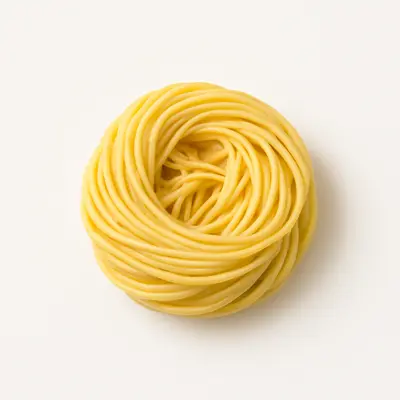
Okinawa noodles, dried
Pro 100 g
- Kalorien
- 317 kcal
- Protein
- 12 g
- Ballaststoffe
- 2.1 g
- Fett
- 1.7 g
Fettarm 5 % der Kalorien stammen aus Fett. Unsere Skala
Alle Nährstoffe
Per 100 g of okinawa noodles, dried. % Daily Value is for an adult, US FDA values.
Makronährstoffe
| Nährstoff | Pro 100 g | % Tagesbedarf |
|---|---|---|
| Kohlenhydrate | 68 g | 25% |
| Protein | 12 g | 24% |
| Fett | 1.7 g | 2% |
| Wasser | 14 g |
Kohlenhydrate
| Nährstoff | Pro 100 g | % Tagesbedarf |
|---|---|---|
| Fiber | 2.1 g | 8% |
| Zucker | 1.5 g |
Fette
| Nährstoff | Pro 100 g | % Tagesbedarf |
|---|---|---|
| Gesättigte Fette | 0.39 g | 2% |
| Einfach ungesättigte Fettsäuren | 0.15 g | |
| Mehrfach ungesättigte Fettsäuren | 0.86 g | |
| Omega 3 | 0.04 g | |
| Omega 6 | 0.82 g | |
| Cholesterin | 0 mg | 0% |
Vitamine
| Nährstoff | Pro 100 g | % Tagesbedarf |
|---|---|---|
| Vitamin A (RAE) | 0 µg | 0% |
| Vitamin C | 0 mg | 0% |
| Vitamin D | 0 µg | 0% |
| Vitamin E | 0.1 mg | 1% |
| Vitamin K1 | 0 µg | 0% |
| Thiamin (B1) | 0.12 mg | 10% |
| Riboflavin (B2) | 0.05 mg | 4% |
| Niacin (B3) | 1.1 mg | 7% |
| Pantothensäure (B5) | 0.49 mg | 10% |
| Vitamin B6 | 0.05 mg | 3% |
| Folate (DFE) | 8 µg | 2% |
| Vitamin B12 | 0 µg | 0% |
Verlinkte Nährstoffe öffnen eine Tabelle, die pflanzliche Lebensmittel nach diesem Nährstoff ordnet.
Wie wir Fett einstufen
Unsere eigene Skala, strenger als offizielle Kennzeichnungen: Ein Lebensmittel mit weniger als 10 % der Kalorien aus Fett gilt als fettarm, 10 % bis unter 20 % als mittlerer Fettgehalt, 20 % oder mehr als fettreich. Die Kennzeichnung beschreibt, wie sich die Kalorien des Lebensmittels zusammensetzen; offizielle US- und UK-Kennzeichnungen verwenden andere Grenzwerte.
Weiteres Getreide und Nudeln
 Corn tortillas
- Organic multigrain baguette (Wegmans)
- Amarant, gekocht
- Amarant, ungekocht
- Gerste, geschält
 Gerste, Perlgraupen, roh
 Buchweizen
- Bulgur, gekocht
Alles Getreide und alle Nudeln · Alle Zutaten
Quelle
Standard Tables of Food Composition in Japan, 8th revised edition, 2023 supplement (MEXT): Common wheat, Okinawa noodles, dried noodles, uncooked (こむぎ [中華めん類] 干し沖縄そば 乾), food code 01054. Source: Standard Tables of Food Composition in Japan (Eighth Revised Edition), 2023 supplement, Ministry of Education, Culture, Sports, Science and Technology (MEXT), data updated 27 March 2026; English names from MEXT's 2015 English edition. Values edited by us (units and totals). MEXT website terms of use (Government Standard Terms of Use, compatible with CC BY 4.0). The table. Protein (nitrogen x factor), total lipid and carbohydrate by difference, as USDA measures them; sugars are the sum of the sugars in the carbohydrate tables. Daily Values: US FDA, 21 CFR 101.9.