ALA Omega-3 in Plant Based Foods
2,199 plant foods ranked by ALA omega-3 per 100 g. Search a food, pick a food group or keep whole foods only.
- 2,199 plant foods with ALA data
- Source: USDA FoodData Central
- Updated: 2022 — ALA (18:3 n‑3) measured
Top 50 of 585 whole foods (2,199 with the switch off), per 100 g unless marked.
| # | Group | |||||||
|---|---|---|---|---|---|---|---|---|
| 1 |  Seeds, flaxseed Seeds, flaxseed | Seeds | 22.813 | 0 | 0 | 0 | 0 | |
| 2 | Flaxseed, ground | Seeds | 19.42 | – | – | – | – | |
| 3 |  Seeds, chia seeds, dried Seeds, chia seeds, dried | Seeds | 17.83 | – | – | – | – | |
| 4 | Seeds, hemp seed, hulled | Seeds | 8.684 | 0.617 | – | – | – | |
| 5 |  Nuts, walnuts, english Nuts, walnuts, english | Nuts | 9.08 | 0 | 0 | 0 | 0 | |
| 6 | Nuts, butternuts, dried | Nuts | 8.718 | 0 | 0 | 0 | 0 | |
| 7 | Nuts, walnuts, dry roasted, with salt added | Nuts | 8.493 | 0 | 0 | 0 | 0 | |
| 8 | Spices, mustard seed, ground | Spices and Herbs | 3.792 | 0 | 0 | 0 | 0 | |
| 9 | Spices, marjoram, dried | Spices and Herbs | 3.23 | 0 | 0 | 0 | 0 | |
| 10 | Spices, tarragon, dried | Spices and Herbs | 2.955 | 0 | 0 | 0 | 0 | |
| 11 |  Spearmint, dried Spearmint, dried | Spices and Herbs | 2.792 | – | – | – | – | |
| 12 |  Nuts, walnuts, black, dried Nuts, walnuts, black, dried | Nuts | 2.677 | 0 | 0 | 0 | 0 | |
| 13 | Nuts, mixed nuts, dry roasted, with peanuts, salt added, CHOSEN ROASTER | Nuts | 2.017 | 0 | 0.008 | 0 | 0 | |
| 14 | Tofu, dried-frozen (koyadofu), prepared with calcium sulfate | Legume Products | 2.024 | – | – | – | – | |
| 15 | Tofu, dried-frozen (koyadofu) | Legume Products | 2.024 | – | – | – | – | |
| 16 | Spices, parsley, dried | Spices and Herbs | 1.86 | 0 | 0 | 0 | 0 | |
| 17 | Nuts, beechnuts, dried | Nuts | 1.7 | – | – | – | – | |
| 18 | Soybeans, mature seeds, roasted, no salt added | Legumes | 1.694 | 0 | 0 | 0 | 0 | |
| 19 | Seeds, sisymbrium sp. seeds, whole, dried | Seeds | 1.451 | – | – | – | – | |
| 20 | Soybeans, mature seeds, dry roasted | Legumes | 1.443 | – | – | – | – | |
| 21 | Tofu, fried, prepared with calcium sulfate | Legume Products | 1.346 | – | – | – | – | |
| 22 |  Tofu, fried Tofu, fried | Legume Products | 1.346 | 0 | 0 | 0 | 0 | |
| 23 |  Soybeans, mature seeds, raw Soybeans, mature seeds, raw | Legumes | 1.33 | – | – | – | – | |
| 24 |  Spices, saffron Spices, saffron | Spices and Herbs | 1.242 | 0 | 0 | 0.006 | 0 | |
| 25 | Spices, sage, ground | Spices and Herbs | 1.23 | 0 | 0 | 0 | 0 | |
| 26 | Spices, rosemary, dried | Spices and Herbs | 1.076 | 0 | 0 | 0 | 0 | |
| 27 |  Spices, bay leaf Spices, bay leaf | Spices and Herbs | 1.05 | 0 | 0 | 0 | 0 | |
| 28 | Nuts, hickorynuts, dried | Nuts | 1.047 | 0 | 0 | 0 | 0 | |
| 29 | Vegetarian fillets | Legumes | 1.04 | 0 | 0 | 0 | 0 | |
| 30 | Papad | Legumes | 1.034 | 0 | 0 | 0 | 0 | |
| 31 | Mungo beans, mature seeds, raw | Legumes | 0.999 | – | – | – | – | |
| 32 | Nuts, pecans, dry roasted, without salt added | Nuts | 0.994 | 0 | 0 | 0 | 0 | |
| 33 | Nuts, pecans, dry roasted, with salt added | Nuts | 0.994 | 0 | 0 | 0 | 0 | |
| 34 |  Nuts, pecans Nuts, pecans | Nuts | 0.986 | 0 | 0 | 0 | 0 | |
| 35 | Grape leaves, raw | Vegetables | 0.856 | 0 | 0 | 0 | 0 | |
| 36 | Grape leaves, canned | Vegetables | 0.843 | – | – | – | – | |
| 37 | Seaweed, spirulina, dried | Vegetable Products | 0.823 | 0 | 0 | 0 | 0 | |
| 38 | Nuts, pine nuts, pinyon, dried | Nuts | 0.787 | – | – | – | – | |
| 39 | Spices, cloves, ground | Spices and Herbs | 0.585 | 0 | 0.008 | 0.184 | 0 | |
| 40 | Peppers, sweet, red, sauteed | Vegetables | 0.775 | 0 | 0 | 0 | 0 | |
| 41 | Peppers, sweet, green, sauteed | Vegetables | 0.77 | 0 | 0 | 0 | 0 | |
| 42 | Beans, french, mature seeds, raw | Legumes | 0.765 | – | – | – | – | |
| 43 |  Natto Natto | Legume Products | 0.734 | 0 | 0 | 0 | 0 | |
| 44 | Wheat germ, crude | Grains | 0.723 | – | – | – | – | |
| 45 |  Radish seeds, sprouted, raw Radish seeds, sprouted, raw | Vegetables | 0.722 | – | – | – | – | |
| 46 | Hummus, commercial | Legumes | 0.711 | 0 | 0 | 0 | 0 | |
| 47 | Leeks, (bulb and lower-leaf portion), freeze-dried | Vegetable Products | 0.691 | – | – | – | – | |
| 48 | Spices, thyme, dried | Spices and Herbs | 0.69 | 0 | 0 | 0 | 0 | |
| 49 | Tofu, hard, prepared with nigari | Legume Products | 0.667 | – | – | – | – | |
| 50 | Onions, yellow, sauteed | Vegetables | 0.66 | 0 | 0 | 0 | 0 |
Everyday foods rich in ALA omega-3
Whole foods with their own page, per 100 g; spices and dried herbs left out.
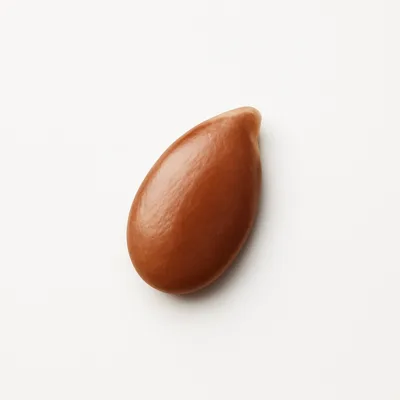 Seeds, flaxseed
 Seeds, chia seeds, dried
 Nuts, walnuts, english
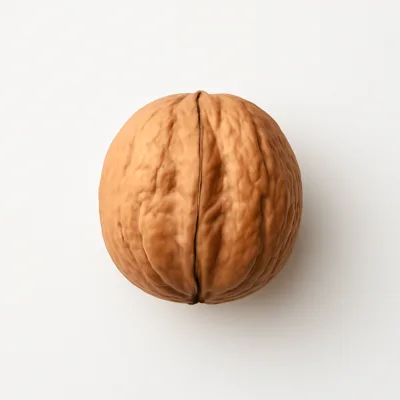 Nuts, walnuts, black, dried
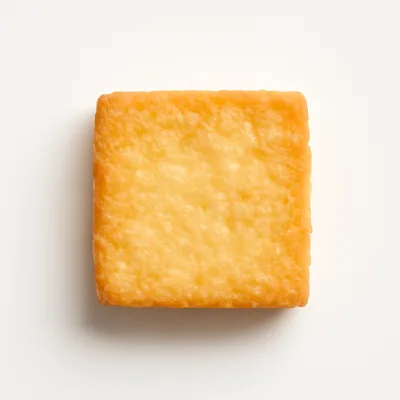 Tofu, fried
 Soybeans, mature seeds, raw
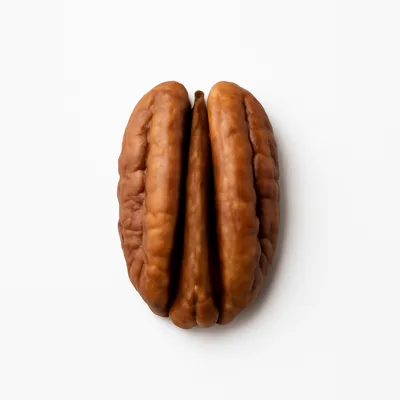 Nuts, pecans
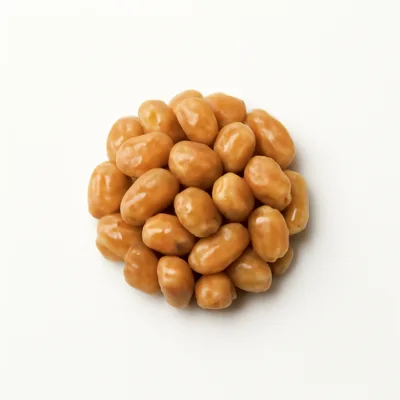 Natto
NattoGood to know
ALA omega-3 in context
ALA (alpha-linolenic acid) is the essential plant omega-3. The body can convert ALA to EPA and DHA, though conversion rates are modest. Flaxseeds, chia seeds, hemp seeds, and walnuts are the most concentrated whole-food sources. Algae-based supplements provide EPA/DHA directly for those with higher needs.
Questions
How much ALA do I need per day?
The Adequate Intake (AI) for ALA is 1.6g/day for men and 1.1g/day for women, according to the National Academies of Medicine. One tablespoon of flaxseed oil (~7.3g ALA) or a small handful of walnuts (~2.5g ALA per 28g serving) easily covers the daily requirement.
What is ALA and why is it essential?
ALA (alpha-linolenic acid) is a short-chain omega-3 fatty acid found in plant foods. It is classified as essential because the human body cannot synthesise it — it must be obtained from the diet. ALA is the precursor to EPA and DHA, the longer-chain omega-3s associated with brain, heart, and anti-inflammatory benefits. The conversion rate from ALA to EPA is around 5–10%; to DHA it is less than 1%.
Is ALA the same as fish oil omega-3?
No. ALA (alpha-linolenic acid, 18:3 n-3) is the plant form of omega-3. Fish oil contains EPA (20:5 n-3) and DHA (22:6 n-3), the longer-chain forms. The body can convert ALA to EPA and DHA, but the conversion rate is relatively low. Algae-based DHA supplements provide the long-chain form directly for plant based eaters — without needing fish.
What is SDA omega-3 and how does it differ from ALA?
SDA (stearidonic acid, 18:4 n-3) is another plant omega-3 found in hemp seeds, echium oil, and some leafy greens. It is one metabolic step further along the conversion pathway than ALA and converts to EPA more efficiently than ALA does — making it a more potent omega-3 precursor. Hemp seeds are the most practical dietary source of SDA alongside ALA.
What is the best way to consume flaxseeds for omega-3?
Ground flaxseeds are significantly better than whole flaxseeds for ALA absorption — whole seeds often pass through the digestive system unbroken. Grind them fresh in a coffee grinder or buy pre-ground (store in the fridge). One tablespoon of ground flaxseed contains about 2.3g of ALA. Flaxseed oil is even more concentrated but lacks fibre and lignans present in the whole seed.
Are chia seeds or flaxseeds better for omega-3?
Both are excellent ALA sources. Flaxseeds (~23g ALA/100g) have slightly more ALA than chia seeds (~18g/100g), but chia seeds can be eaten whole without grinding since they do not have the same hard seed coat as flax. Chia seeds also provide more calcium and slightly more fibre per gram. The best choice is whichever you will eat consistently.